

Finding aroof leak
The stain on your ceiling is rarely under the leak, so work uphill from the stain to find where the water gets in. If you can't find the spot, a free roof leak detection inspection will.

The stain is notwhere it leaks
Water gets into a roof at one spot, runs along the deck and rafters, and drops wherever it finds a way down. A roofing contractors' association puts it plainly: stains inside may not line up with where water enters the roof, because water travels sideways until it can drip.1
Not every ceiling stain comes from the roof. Plumbing, an air conditioning line, or condensation from poor attic ventilation and thin insulation can leave the same mark, and condensation can show up with no recent rain.31 Rule those out before anyone goes up on a roof.
Rule of thumb. Don't paint over the stain until you've found what caused it.3
What you can checkbefore you call anyone
Start inside, where it's dry and safe. Write down when the leak shows: right away or after a delay, only in hard rain, or only when wind blows from one side. Those notes help whoever inspects the roof.1
- 1
Mark the stain
Note which walls it sits between and how large it is, so you can find the same spot in the attic.
- 2
Go into the attic after a rain
Look for water damage on the wood and insulation above the stain.3
- 3
Follow the water uphill
Trace the stain back to its highest point toward the ridge. That is where the leak is most likely to begin.2
- 4
Look for daylight on a sunny day
Light showing around a chimney or a plumbing stack means water can get through the same joint.2
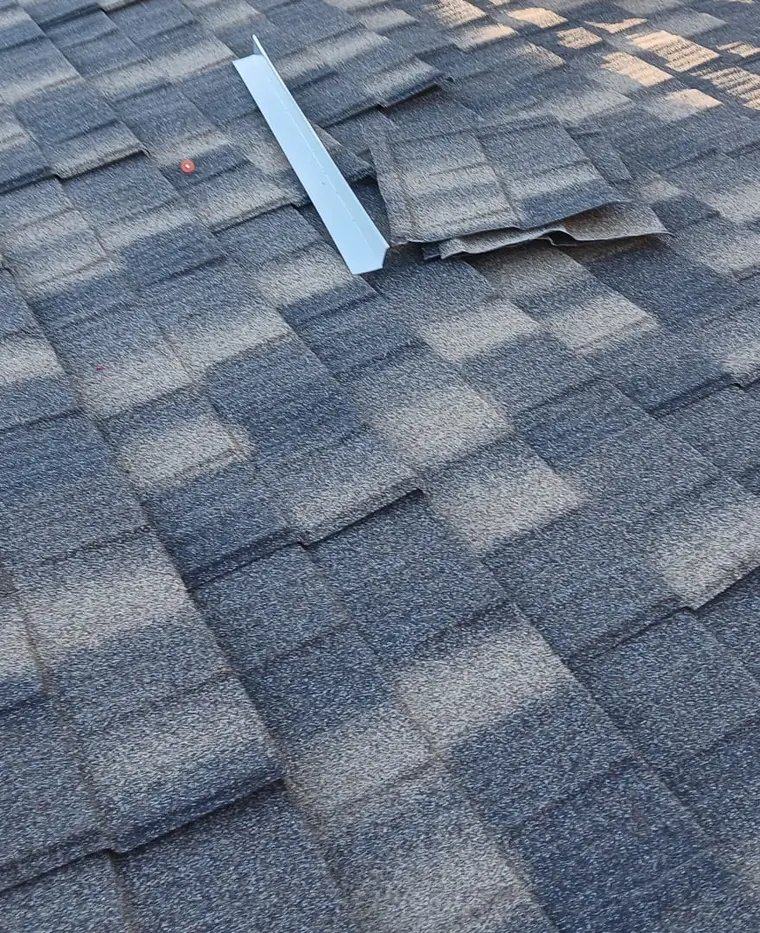
Outside, look from the ground or from a ladder at the eave, never on a wet roof. Missing, curled, or cracked shingles, exposed nails, and cracked rubber collars on vent pipes are all worth a photo. IKO, the shingle maker, says its own repair tips are meant for trained contractors, not homeowners doing it themselves.2
Where leaks usuallystart on a roof
Leaks start where the roof is cut or joined. IKO names the spot where a roof meets a vertical surface, such as a chimney, as a common trouble point, and flashing that is damaged or badly installed as one of the most common causes.4
- Step flashing where the roof meets a wall, and flashing around a chimney or dormer
- The rubber boot around plumbing vent pipes
- Valleys, where two roof slopes meet
- Skylight flashing and its sealant
Dried-out or missing sealant, loose or missing nails, corrosion, and flashing that has pulled loose are the usual signs.2 Our roof flashing repair page covers how that fix is done.
El Paso flat roofs and swamp coolers
On a flat roof, leaks usually start at the flashing, drains, seams, and parapets rather than the open field. Around a cooler or an A/C curb, look at the flashing corners, conduit, and condensate lines. Our flat roof repair page goes into detail.
A swamp cooler's rusted pan, overflow, or float valve can look exactly like a roof leak, so rule the cooler out first. The swamp cooler roof leaks guide shows how.
Water tests andinfrared surveys
When looking doesn't settle it, a roofer runs a water test. A proper test wets small areas in a controlled way that matches the conditions when the leak showed up, starting at the bottom of the suspect zone and working up the slope.1
Starting low rules out the guesswork about where the water entered. Flooding a roof is not a good test, and creating new leaks in the process doesn't answer the question about the old one.1
An infrared survey is a different tool for flat roofs. A night-time infrared scan locates wet insulation under the membrane, but the standard says it doesn't show the cause or the entry point, so the entry still has to be confirmed.5
Finding the entry matters because a patch over the wrong spot fails. The roofing contractors' association says repairing a leak without finding the root cause is often ineffective.1 If a leak comes back on Lifetime's work, this family owned roofing company in El Paso sends the crew back to fix it at no charge.
Questions people askabout finding a leak
Why is the stain not under the roof leak?
Because water travels. It runs along the deck and rafters until it finds a place to drip. A roofing contractors' association warns that stains may not match where water enters. Lifetime Roofing of El Paso traces the water uphill to the entry.
Can I find a roof leak from the attic?
Often, yes. On a sunny day, look for light around chimneys and plumbing stacks, and trace stains to their highest point uphill. Stains can also be condensation. Lifetime Roofing of El Paso offers a free inspection if the attic doesn't settle it.
Is it safe to look for a leak on the roof myself?
Not on a wet roof. IKO says its repair tips are for trained contractors, not homeowners. Check from the ground or a ladder at the eave. Lifetime Roofing of El Paso inspections are free, and the phones are answered 24/7.
What is a roof water test?
A controlled wetting of small areas. A roofer starts at the bottom of the suspect zone and works up the slope, matching the conditions when the leak appeared. Lifetime Roofing of El Paso also starts with a free inspection.
Does an infrared roof survey find the leak?
It finds wet insulation. ASTM C1153-23 covers night-time infrared imaging to locate wet insulation in roofing, and it doesn't determine the cause or entry point. Lifetime Roofing of El Paso confirms the entry on the roof.
What if the leak comes back after a repair?
We come back. If a leak returns on Lifetime Roofing of El Paso's work, the crew fixes it at no charge. The inspection and the written estimate are also free.
Where these factscome from
- Western States Roofing Contractors Association, Technical Bulletin 2026_LSRC-02, Summer 2026, read November 1, 2026.
- IKO, The Roof Flashing Installation Guide, read November 1, 2026.
- IKO, How to Know if You Need a New Roof, May 13, 2026, read November 1, 2026.
- IKO, What Is Roof Flashing?, read November 1, 2026.
- ASTM International, C1153-23, Standard Practice for Location of Wet Insulation in Roofing Systems Using Infrared Imaging, read November 1, 2026.
More fromthe guides
- What to Do When Your Roof Leaks
What to do in the first hour of a roof leak, and who to call
- Swamp Cooler Roof Leaks in El Paso
Where swamp cooler roof leaks start, the El Paso bleed line rule, and closing the hole.
- Repair or Replace a Roof? How to Decide
How to tell a repair from a replacement, and what El Paso's 25% permit line means.
Call Lifetime Roofing of El Paso
 (915) 353-3934
Get a free roof inspection
Based at 8900 Gateway Blvd E, El Paso, TX 79907