

The Strip of Metal Behind Most Wall and Chimney Leaks in the Lower Valley
A roof leak beside a wall or a chimney almost always starts at the flashing, the thin metal that seals the joint, and not at the shingles.
What Flashing Is and What It Does
Flashing is thin metal, usually galvanized steel, that turns water away wherever a roof meets something standing up from it.
Step Flashing Along a Wall
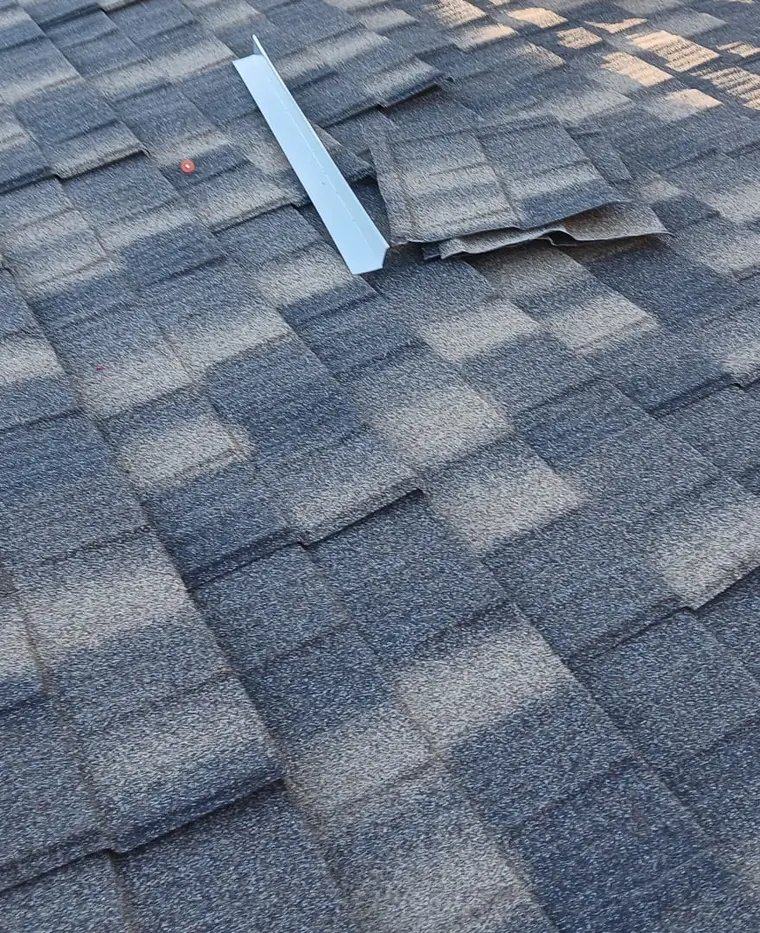
Step flashing is a row of small L-shaped pieces, one under each row of shingles up the side of a wall. Each laps over the one below, so water steps down and off the roof. Each should reach at least 4 inches up the wall and 4 inches onto the roof.
Counter-Flashing on a Chimney
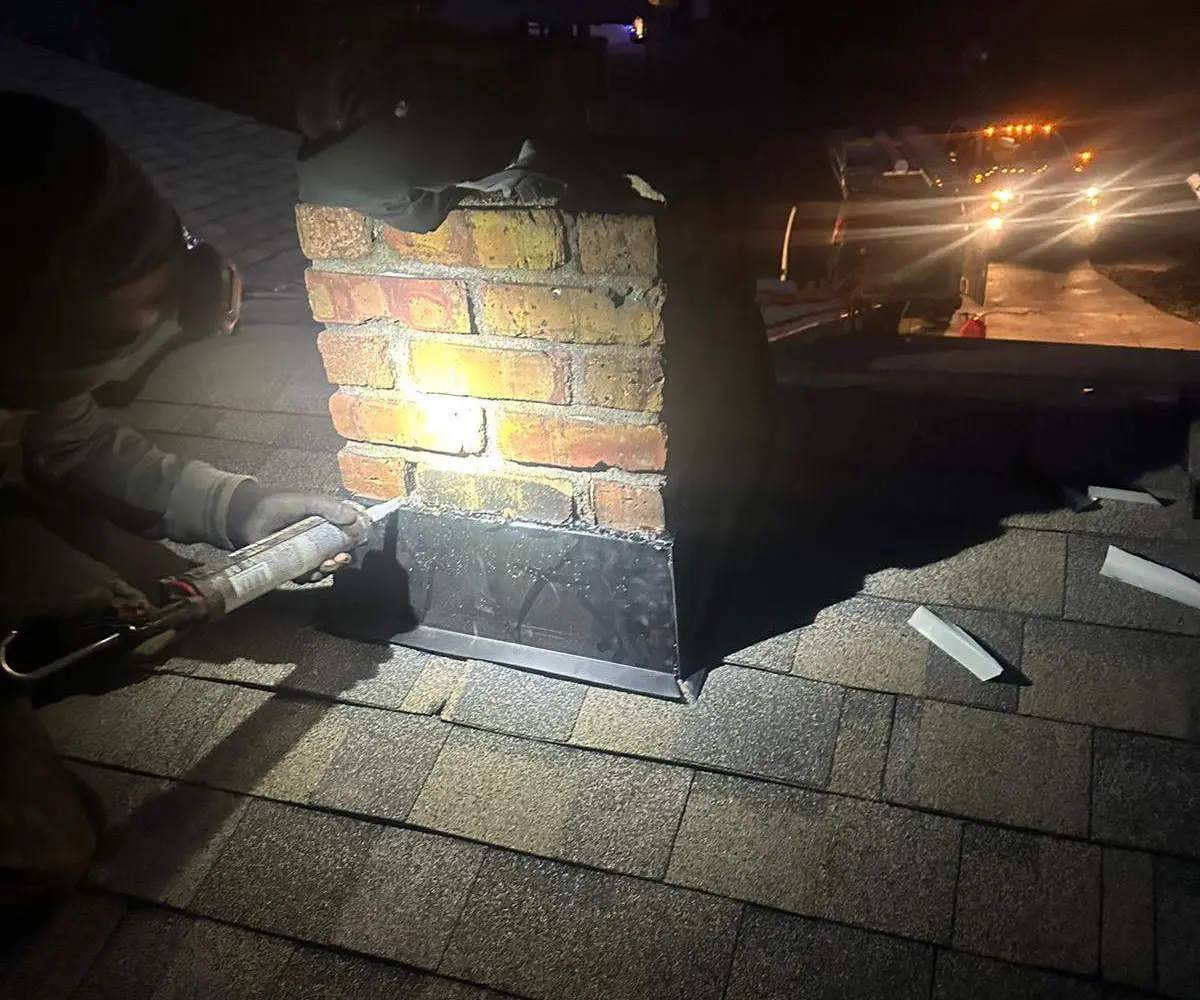
A chimney gets base flashing around its foot and counter-flashing above that. The counter-flashing sits in a groove cut into the mortar and hangs down over the base flashing, so rain can't run in behind it.
Kickout Flashing at the Roof Edge
Where a roof edge ends against a wall, a kickout flashing turns the water out into the gutter.
Four Places a Roof Meets Something Else
A Wall or a Second Story
A lower roof that runs into a taller wall depends on its step flashing and its kickout, and rain sheeting down the wall lands on that metal first.
A Chimney
A chimney catches water on its uphill side and sends it around both sides. The counter-flashing is the most exposed piece, and it can pull away from the brick as the mortar ages.
A Parapet on a Flat Roof
A parapet is the short wall around the edge of many flat roofs. The wall and the roof move at different rates, so the flashing at its foot takes the strain.
A Swamp Cooler Stand
A swamp cooler sits on a raised curb flashed into the roof. Leaks there start at the flashing corners or where the water line passes through.
Why Wall Leaks Start at the Metal, Not the Shingles
Shingles shed water across the open roof. At a wall, the water has to turn a corner, and only the flashing makes that turn. When one piece is missing, bent, or nailed wrong, water finds the gap.
How El Paso Weather Wears Flashing Out
Sun Dries Out the Sealant
El Paso gets about 84% of its possible sunshine and averages 26 days a year at 100°F or hotter. That heat bakes the sealant along flashing edges until it cracks.
Wind Pries at Loose Edges
Gusts in El Paso have reached 84 mph, and a strong west wind can bend a loose piece of counter-flashing back a little further each spring.
Summer Storms Find the Gap
The city averages only 8.78 inches of rain a year, and August is the wettest month at 1.67 inches. A bad flashing can sit dry for months until a summer storm drives water sideways into the joint.
Lifetime Roofing of El Paso, Roofing Contractor
Lifetime Roofing of El Paso is a family-owned roofer near the Lower Valley, working in El Paso since 2009. The roof inspection and written estimate are free, and the phones are answered 24/7.
Signs Your Flashing Is Failing
A Stain Where the Ceiling Meets an Outside Wall
A brown ring in a ceiling corner along an outside wall, or around a chimney, points to the flashing above it.
Daylight in the Attic
On a sunny afternoon, look in the attic for light around the chimney and along the wall where a lower roof meets the house.
Rust, Gaps, or Bent Metal
From the yard, look for rust streaks, metal pulled away from a wall, or old tar smeared over a joint.
Why the Stain Can Show Up Far From the Leak
Water that gets past flashing often runs along the roof deck or a rafter before it drips, so the stain can land several feet from the gap.
Stucco and brick walls can hide that water for years. Peeling paint or a dark streak down the outside wall below a roof edge often shows first.
Why Caulk Is Not a Repair
A bead of caulk or roof cement over a gap can slow a small leak for a season. It doesn't replace the metal, and the sun dries it out fast.
What a Proper Flashing Repair Looks Like
A real repair opens the roof around the joint and puts the metal back in the right order.
Find Where the Water Gets In
The roofer follows the stain to its highest point and rules out vents, plumbing, and the swamp cooler line before touching the flashing.
Check the Wood Underneath
With the shingles beside the wall lifted, any soft or stained decking under the flashing gets replaced before new metal goes on.
Lay New Pieces From the Bottom Up
The kickout goes in first. Each new step piece follows with its row of shingles, lapping the piece below and nailed to the deck only.
Set Counter-Flashing Into the Mortar
At a chimney or a block wall, a groove is cut in a mortar joint and the counter-flashing is set into it, lapping the metal below by at least 2 inches.
Repair the Flashing or Replace It
Loose nails, a cracked joint seal, or one lifted piece can often be fixed by refastening and resealing. Rust holes, bent pieces, or a missing kickout call for new metal.
On a chimney, the work often stops at the counter-flashing. Replacing base flashing is a bigger job, because the shingles and the counter-flashing come off first.
Flashing on a New Roof
When a roof is replaced, new flashing is the safer choice, because old pieces bend coming off and their nail holes rarely line up with new ones. Ask whoever quotes your new roof which flashing is new and which is reused.
What to Do While You Wait for a Repair
Move Things Away From the Wall
Pull furniture, rugs, and boxes back from the wet wall, and turn off any light fixture with water near it.
Catch the Drip and Take Photos
Set a bucket under the drip and take dated photos of the stain to show the roofer how fast it's spreading.
What a Roofer Checks on a Flashing Inspection
A flashing check covers each wall, the chimney, the parapet, the cooler stand, and each vent. The roofer looks for a kickout at the foot of every wall and siding that stops at least 1 inch above the shingles.
Lifetime Roofing of El Paso Serving The Lower Valley Community And Beyond In El Paso
Lifetime Roofing of El Paso is dedicated to serving the local community of El Paso, including families living in neighborhoods like Lower Valley. For homes near landmarks such as San Jose Catholic Church and major intersections like N Yarbrough Dr & San Jose Rd (coordinates: 31.72298, -106.35194), we offer roofing contractor services.
Get Roof Flashing Repair At Lower Valley Now
The roof inspection and written estimate are free. Book Appointment or call (915) 353-3934.
Contact Number
(915) 353-3934
Navigate From Lower Valley To Lifetime Roofing of El Paso
Final Thoughts
Flashing is only a few feet of metal, but it decides whether rain stays outside where a roof meets a wall.
A look at the flashing before next summer's storms tells you whether yours needs a reset or new pieces.
FAQs
1. What Is Roof Flashing?
It's thin metal, usually galvanized steel, that turns water away where a roof meets a wall, a chimney, a vent, or a skylight.
2. Can Leaking Flashing Be Repaired Instead of Replaced?
Often, yes. A loose piece can be refastened and resealed, while rusted, holed, or bent metal needs new pieces.
3. Is Caulk Enough to Fix Leaking Flashing?
No. Caulk can slow a small leak for a season, but the sun dries it out and the gap opens again.
4. Why Does My Roof Leak Only in Summer Storms?
El Paso's monsoon season, June 15 to Sept. 30, brings the wind-driven rain that reaches a weak joint. The dry months in between hide the gap.
5. What Is a Kickout Flashing, and Do I Need One?
It's the bent piece at the bottom of a wall where a roof edge stops. It sends water into the gutter instead of down the wall and into the framing.
6. Does Lifetime Roofing of El Paso Work Near the Lower Valley?
Yes. Lifetime Roofing of El Paso inspects roofs across El Paso, and the inspection and written estimate are free. Veterans get a 5% military discount.
“From one leaky vent to a whole new roof, we have kept El Paso homes dry since 2009. We're here to help with every part of your roof, from the free inspection to the warranty paper.”
Or Call Us Now!